Mar 21, 2017 | John S Kiernan, Senior Writer & Editor
0
SHARES
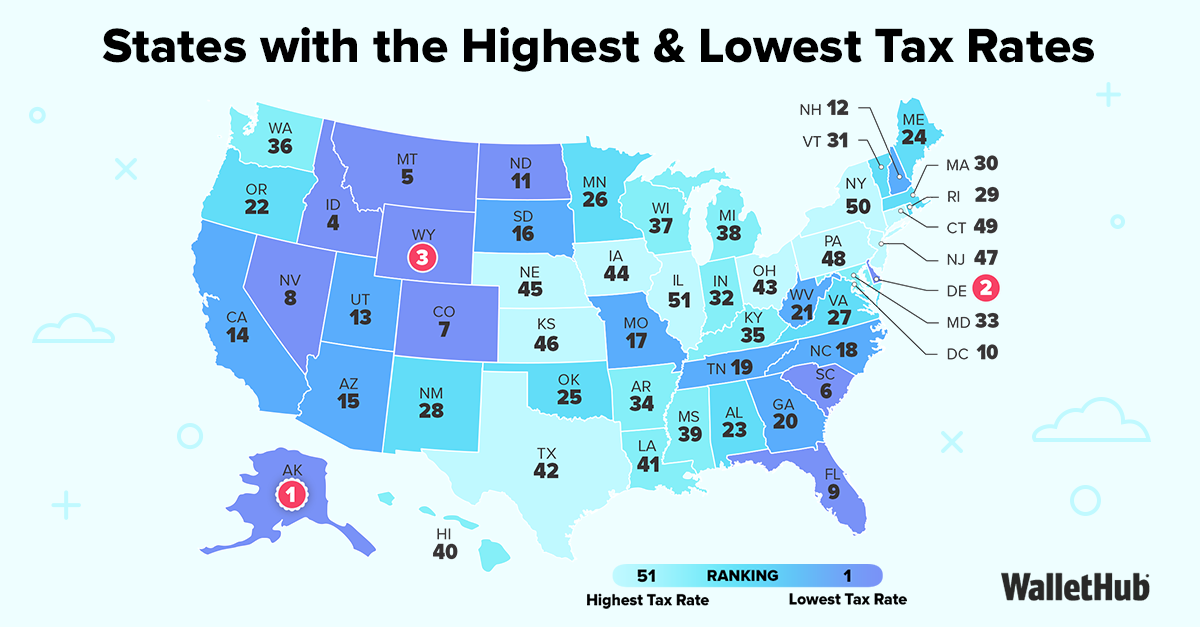
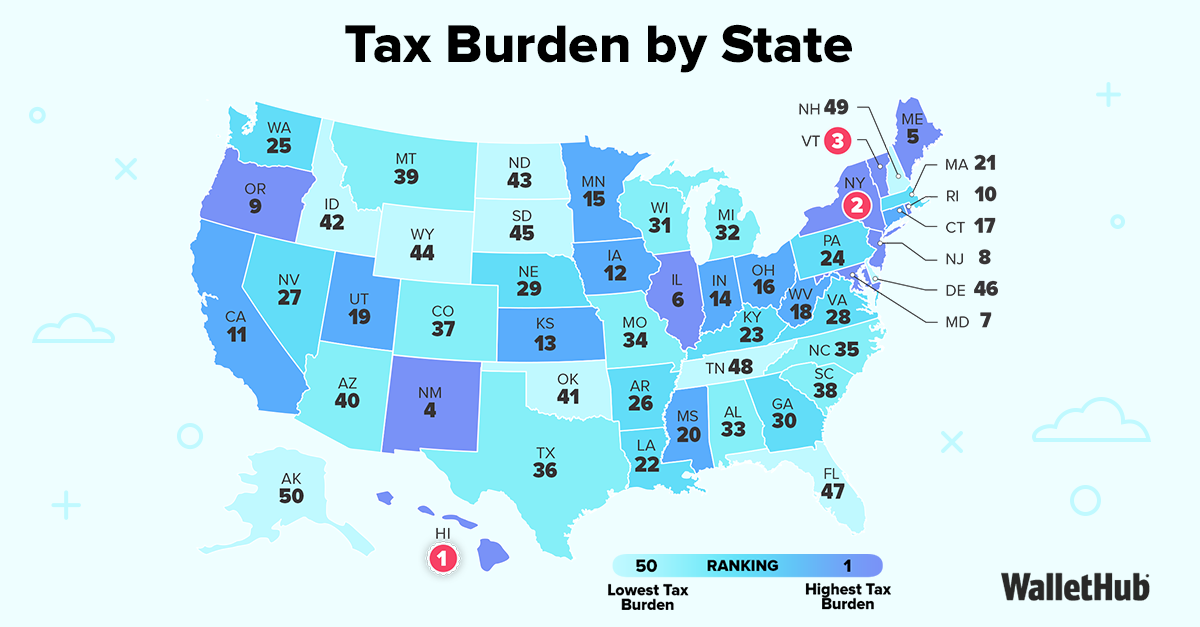
The extent to which the average American’s tax burden varies based on his or her state of residence represents a significant point of differentiation among state economies. But it’s only one piece of the puzzle.
What if, for example, a particular state can afford not to tax its residents at high rates because it receives disproportionately more funding from the federal government than states with apparently oppressive tax codes? That would change the narrative significantly, revealing federal dependence where bold, efficient stewardship was once thought to preside.
The idea of the American freeloader burst into the public consciousness when #47percent started trending on Twitter in 2012. And while the notion is senselessly insulting to millions of hardworking Americans, it is true that some states receive a far higher return on their federal income-tax contributions than others.
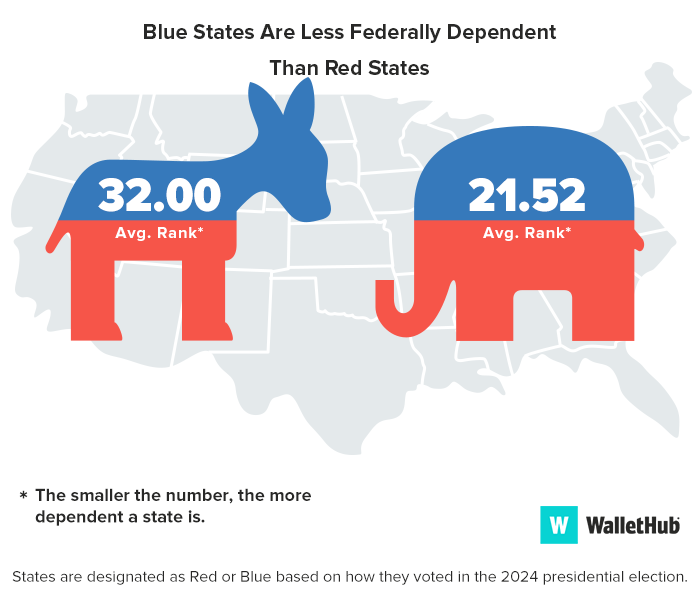
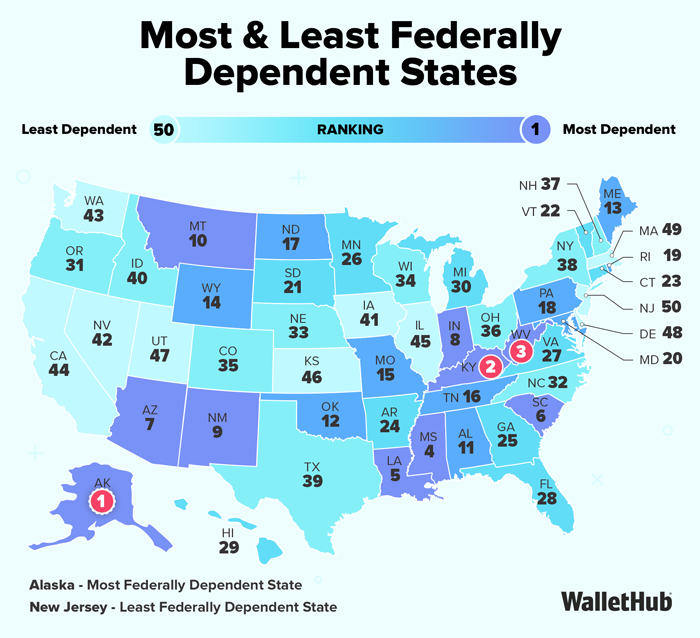
Just how pronounced is this disparity? And to what extent does it alter our perception of state and local tax rates around the country? WalletHub sought to answer those questions by comparing the 50 states in terms of three key metrics. Read on for our findings, expert commentary and a detailed methodology.
Ask The Experts: Making Sense of Funding Disparities
For further clarity on the problems contributing to federal-funding disparities, we consulted a panel of experts in the fields of economics and public policy. Click on the experts’ profiles to read their bios and responses to the following key questions:
Should Federal resources be allocated to states according to how much they pay in federal taxes or should some states subsidize others?
What programs should be a state/local responsibility and what should be a federal responsibility?
What is the most fair way to redistribute federal resources back to the states?
Should the federal government cut assistance to states with sanctuary cities?
Assistant Professor in the Department of Public Policy and Administration at Rutgers University
Should Federal resources be allocated to states according to how much they pay in federal taxes or should some states subsidize others?
Not necessarily. From an economic efficiency perspective, federal funding should be allocated based on the how much social benefit (e.g., positive spillovers to other states) a particular state government can create when using the federal funding. For example, if a certain state uses federal funding to improve its roads and highways, this will not only benefit the residents of that state, but it will benefit non-residents who travel to the state for work or recreational purposes. Based on this efficiency perspective, state’s level of federal funding should be proportional to the size of the social benefit that the state government creates for non-residents when using federal funding.
The challenge with using an economic efficiency perspective to allocate federal funding in this perspective does not consider fairness or equity. Since many of the states with the highest median incomes also create the largest positive spillover effects to non-residents, there is likely an equity and efficiency tradeoff when allocating federal resources.
What programs should be a state/local responsibility and what should be a federal responsibility?
The federal government should be the primary source of funding for national defense and other international focused programs. There are various reasons why this should be the case, but my favorite reason comes from the field of economics and its concept of pure public goods. National defense is a pure public good because you can’t exclude anyone in society from benefiting from the provision of national defense and anyone can benefit from national defense at the same time. If state governments were instead responsible for their own defense spending, some states would have an incentive to underfund their own defense spending with the hope that they could “free ride” the benefits from their neighboring state’s defense spending.
There are some programs that are primarily under the responsibility of the state and local governments. Public K-12 education is one of these programs. In the average state, approximately 90% of education funding comes from state and local sources. There are various reasons why K-12 education should be funded this way, but there are some alternative viewpoints that argue that federal government should increase its share of funding. One viewpoint says that individuals are more mobile today and there are more individuals likely to move and work in a different state than where they went to K-12 schools. If the benefits from educating a student in State A is spilling over into State B, there is a rationale for State B to make sure the education quality in State A is at a high level. One way to internalize these positive spillover effects across states from K-12 spending is to have the federal government tax all individuals and redistribute the revenue to states that provide the largest cross-state positive spillover effects. This would require the federal government to take on a larger share of education funding.
What is the most fair way to redistribute federal resources back to the states?
There is no fair way to redistribute federal resources back to the states because there is no clear definition of “fairness.”
Should the federal government cut assistance to states with sanctuary cities?
A federal budget that reduces federal funding assistance to states with sanctuary cities is unlikely to get through Congress, because members of Congress from both political parties in the same state would have an incentive to work together to remove that aspect from the budget. For example, the city of Philadelphia is a sanctuary city, but there are many areas in state of Pennsylvania that would be affected by a cut in federal assistance to the state. Therefore, the Trump administration would be alienating members of his own party in an important swing state by reducing federal assistance to Pennsylvania, or other similar states with sanctuary cities.
Marvin Phaup
Professorial Lecturer and Research Scholar at the George Washington University
Should Federal resources be allocated to states according to how much they pay in federal taxes or should some states subsidize others?
I think state allocation depends on the purpose of the particular federal program. Not all federal spending is intended to be a transfer of income and wealth. Much serves federal objectives, other than "equity," including defense, transportation, space exploration, preservation of wilderness recreation, administration of justice, etc. By virtue of their geographic and other characteristics, many states are better situated to support these activities than others. The natural seaports in VA, HI, CA, and WA come to mind as examples of places where spending by the Navy does not appear to be driven by "equity" considerations.
What programs should be a state/local responsibility and what should be a federal responsibility?
The U.S. Constitution offers the Founders' views, but those have clearly lost their primacy. One more" modern" answer is that states/localities should retain responsibility where local-regional differences exist in the level and composition of the demand for public services and in the amount of local specific information needed to devise and execute effective, efficient policies. This is all subject to the restriction that significant spillovers do not significantly affect neighboring jurisdictions and that the costs of negotiating regional policy agreements are not prohibitive.
What is the most fair way to redistribute federal resources back to the states?
For pure redistribution or equity, by formula that people accept as fair and just, and that is set without knowing precisely the effects of the formula on individual states and would change over time as the unforeseeable future unfolds. Some care needs to be given to assure that the transfer policy does not exacerbate moral hazard -- or state and local policies designed to exploit the particulars of the redistribution rule to maximize their share.
Should the federal government cut assistance to states with sanctuary cities?
The federal government has a long history of using grants and the threat of their withdrawal to enforce policies deemed to be in "the public interest."
Kevin Bronner
Public Service Professor at University of Albany - State University of New York
Should Federal resources be allocated to states according to how much they pay in federal taxes or should some states subsidize others?
Rich states should subsidize poor states. For instance, the State of Connecticut is a rich state in terms of per capita income while the State of Mississippi is a poor state. Also, the majority of voters in Connecticut support large government programs. It is appropriate for states like Connecticut to subsidize a state like Mississippi that scores low on wealth indices.
Study after study from the 1970s until now show that the State of New York receives about 80 cents on the dollar from money that it sends to Washington. The majority of voters in New York State support big government programs on Election Day year after year so it does not seem to bother most voters that New York subsidizes other states.
What programs should be a state/local responsibility and what should be a federal responsibility?
The federal government has a big opportunity to promote infrastructure spending for the states.
The politicians in Washington D.C. should work together to solve our infrastructure problems. There are some relatively simple ways to fund our infrastructure problems, which can lead to solving the problem. The American Society of Civil Engineers estimates that about $4.6 trillion of infrastructure projects should be undertaken over the next 10 years. Major items include roads and surface transportation ($2.0 trillion), electricity system issues ($934 billion), schools ($870 billion), airports ($157 billion), railroads ($125 billion), drinking water and sewer ($150 billion). There is funding for some of the projects but more money needs to be attracted. About $2.5 trillion of funds will be available to finance the projects. This means that about $2.0 trillion in other money must be raised by the politicians to finance all the needed projects.
There is a discussion going on in Washington about developing a 10-year $1 trillion plan to finance the projects. So where could this money come from? Currently, foreign corporations have approximately $2 trillion of money parked overseas. If Congress would let them bring the money back to the United States at a low or zero tax rate, much money could be attracted to fund the infrastructure projects. Firms that bring back money could purchase bonds in the infrastructure projects at reasonable interest rates, which would benefit the corporations and the infrastructure projects. Congress could change this tax policy easily with little or no loss in tax revenues.
Banks could also help to fund the projects with infrastructure bonds. Currently, banks must maintain about $2 trillion of funds at the Federal Reserve System in Washington. The politicians could change this policy to allow the banks to invest some of the money in the needed infrastructure projects using bond financing. The banks would profit, as would the infrastructure projects. This is another policy that could be changed by Congress with cooperation from the Federal Reserve System.
The corporate money overseas ($2 trillion) and the bank funds maintained by the Federal Reserve System ($2 trillion) could provide ample funds to finance infrastructure projects. Politicians could change some tax and banking policies easily to implement proper financing of the infrastructure projects.
The federal government should let states develop the health care program that best fits their state.
This was done in Massachusetts before the current federal health care system was developed and the program worked fairly well. Funding can be provided by the federal government to help the states.
The health care programs being developed by the federal government seem to defy any element of common sense. The current federal program assumes that young people will come into the market and drive down the cost of health insurance. This is not true, according to the history of the program that currently exists. Young people did not enter the healthcare insurance market in sufficient numbers to drive down costs. It is simple to explain why they did not enter the health care marketplace by examining what could happen to a healthy young person with a $50,000 job who has a common cold once a year as their only medical problem. A common sense evaluation of this transaction illustrates why the younger person would not want to purchase a health insurance policy.
Consider a healthy 20 or 30 year old whose only medical problem is having a common cold once per year. They can go to the doctor and get treated for about $200 in doctor fees and perhaps a $50 prescription. The total cost to solve the cold issue is $250. This is considered a self-insurance option for the patient where they decide not to purchase health insurance but to simply pay any medical fees as they arise.
If you examine some of the insurance options on the New York State Health Care Exchange, the same young person can consider purchasing a health insurance policy that could cost about $5,000 per year in the Albany, New York area. This could be reduced by a federal subsidy or a tax credit for some lower income people, but a working professional with a $50,000 job would receive little if any benefit. The policy could also have a deductible of about $2,500. If we assume the person purchases a $5,000 health insurance policy with a deductible of $2,500, this means to obtain any reimbursement for treatment of the same cold the middle-income person has to spend $7,500 in premium costs and deductible costs. The person with the simple cold as their only problem had to pay 30 times the cost of treating the cold ($7,500/$250) under the federal health insurance program than they would pay if they were self-insured. The young person could be fined a relatively minor amount by the federal government, but that fine would not change the economics of the program.
Under current federal law, health insurance programs also require that pre-existing medical conditions can’t be used to stop a person from buying health insurance. The same young self-insured person with the cold could simply wait until they develop a major medical condition and then purchase health insurance for the major medical issue under the current-year enrollment program. Let’s assume that a young person with a serious illness decides to purchase the health insurance policy for a cost of $7,500 and has major medical bills in year one of $50,000. This means that the health insurance company suffers a loss on the patient of $42,500. No wonder that many health insurance companies are pulling out of the health care exchanges.
The field of economics has a subcategory which is referred to as behavioral economics. This field examines specific issues such as health care to determine how behavior of people and firms would be affected by public policy. The transaction outlined above show that the common sense solution for the young person is to stay self-insured and not to purchase health insurance until a major medical event occurs. Also, the health insurance company would probably not like to offer health insurance to patients of this type due to the financial risk involved. The current federal health insurance program is suffering because the young healthy people who were expected to purchase health insurance failed to participate in the program. Perhaps the $7,500 common cold analogy should be studied by the politicians and bureaucrats in Washington D.C. as they try to solve the health care problems.
What is the most fair way to redistribute federal resources back to the states?
An income-based means test is the best way to redistribute resources. Also, if there is a need such as more education or more health care for poor states, that could be considered in the equation.
Karen Baehler
Scholar in Residence at American University
Should Federal resources be allocated to states according to how much they pay in federal taxes or should some states subsidize others?
The answer depends on how strongly we feel about equality under the law and the principle that every U.S. citizen counts the same as every other citizen. GDP per capita in North Dakota (ranked number 1 on this indicator) is more than twice that of Mississippi (ranked 50th), and total taxable resources per capita in both the District of Columbia (ranked number 1 on this indicator) and Connecticut (ranked number 2) are more than double that of Mississippi (ranked 50th).
In other words, to generate the same state per capita level of spending on services for residents, Mississippi would need to impose taxes at twice the rate of these richer states. In lieu of higher tax rates, state services end up being squeezed. Should basic economic background conditions determine the quality of schools or roads or environmental protection or economic development efforts experienced by residents of different states? Of course not. Cross-state subsidies are the only fair approach. And as a bonus, they lift everyone’s fortunes by making the country stronger. There is now considerable evidence showing that larger discrepancies between the rich and poor make everyone in a community worse-off. In the U.S. community, that means that the residents of Connecticut and North Dakota should be happy to send some of their wealth to poorer states.
What programs should be a state/local responsibility and what should be a federal responsibility?
States and localities should run programs in areas where competition among them is likely to have positive effects. For example, economic development efforts are best governed and managed at the state and local level (with federal subsidies to address unequal state resources), because competition spurs innovation. By contrast, social assistance programs should be a federal responsibility, because when states compete with each other to avoid attracting low-income residents, everyone suffers.
What is the most fair way to redistribute federal resources back to the states?
Through revenue sharing, with formulas determined by a panel of experts rather than logrolling congressional committees.
Should the federal government cut assistance to states with sanctuary cities?
No. Republicans, who favor devolution of power to levels of government closer to the people, should be appalled by this idea. Anyone who values choice and autonomy should want to see the residents of cities able to make their
own judgments about how to treat their residents. There is very sharp disagreement in the U.S. at the moment about how to treat undocumented immigrants, and respecting differences in policy choices at the local level is a very healthy way to manage that disagreement. This is how many Republicans would like to handle disagreements about abortion (by letting states decide their own policies); they should apply the same principle to managing undocumented residents.
Jeffrey I. Chapman
Foundation Professor Emeritus of Applied Public Finance in the School of Public Affairs at Arizona State University
Should Federal resources be allocated to states according to how much they pay in federal taxes or should some states subsidize others?
Neither are good rules nor, since the demise of the Revenue Sharing program, has cash flowed to states with substantial strings. Rather, the distribution of federal funds should flow to necessary programs. If a state does not have its own adequate resources, the federal government should step in to help finance the programs. This will automatically lead to a distribution in which some states get more than others for a particular program.
What programs should be a state/local responsibility and what should be a federal responsibility?
I would answer based on the Oates’ Decentralization Theorem. If there are no cost savings from centralization and there are no interjurisdictional externalities or spillovers, then the provision of the particular public service should be at the smallest unit of government that meets these constraints. This means that local governments should provide such local public services as police, fire, libraries, etc. and the federal government should provide services that are national public goods with national externalities. Examples would be national defense, health care, income distribution programs such as social security and Medicare, and some environmental programs.
What is the most fair way to redistribute federal resources back to the states?
I would argue that, in addition to national defense adequacy, the goal of the national government is to maximize the nation’s social well-being. Thus, it is necessary for an examination of the ability of each state to ensure that the state is able to provide a level of public services that contributes to this goal. This means that poor states will get more federal resources than rich states.
Note that this question addresses only half of the problem. The other half is that the federal government should obtain resources for redistribution through an equitable process. The current policy attempts to lessen the progressivity of the tax system is counterproductive.
Should the federal government cut assistance to states with sanctuary cities?
This is an unjustified use of a political stick to hit cities which are most typically Democratic. Unfortunately, if this stick is used, and since cities are often dependent on these funds for the provision of local services, all of the residents of the cities will be affected.
Methodology
In order to determine the most and least federally dependent states, WalletHub’s analysts compared the 50 states across two key dimensions, namely “State Residents’ Dependency” and “State Government’s Dependency.”
We evaluated those dimensions using three relevant metrics, which are listed below with their corresponding weights. Each metric was graded on a 100-point scale, with a score of 100 representing the highest level of federal.
We then calculated the overall score for each state based on its weighted average across all metrics and used the resulting scores to construct our final ranking.
State Residents’ Dependency – Total Points: 50
Return on Taxes Paid to the Federal Government: Triple Weight (~37.50 Points) Note: This metric was calculated by dividing federal funding in U.S. dollars by IRS collections in U.S. dollars.
Share of Federal Jobs: Full Weight (~12.50 Points)
State Government’s Dependency – Total Points: 50
Federal Funding as a Share of State Revenue: Full Weight (~50.00 Points) Note: This metric reflects the proportion of state revenue that comes from the federal government in the form of intergovernmental aid.
The following metrics were included in the infographic above for context only. They represent subsets of federal funding and are reflected in the first two metrics.
“Federal Contracts” divided by “IRS Collections”
“Grants” divided by “IRS Collections”
Sources: Data used to create this ranking were collected from the Internal Revenue Service, U.S. Census Bureau, USAspending.gov, Bureau of Labor Statistics and Governing.com. Unless noted otherwise, the statistics underlying this report are from 2014 and 2015.
What I notice most about this study is that the comments from the people in Red States are solely around them being insulted thinking that Blue States support them in any way. As usual, the Red States continuously bad mouth the Feds and refuse to acknowledge that they would not exist without the Federal tax dollars they suck up.
·
@raydent99
Now that Congress is debating eliminating the SALT deduction...
States that receive less federal funding can afford to do so because they collect more taxes from their residents, and keep those taxes in-state to use for only their residents, therefore not needing as much funding from the federal government.
But due to the SALT deduction, a guy earning $1 million in California pays roughly $50,000 less in Federal taxes to the federal government than a guy earning $1 million in Florida (no state income tax). Same income, but the feds collect more from the Floridian
The residents in Florida are therefore subsidizing the residents in California, so the state of California can keep more of that million dollar-earner’s money in their state to spend on Californians
··
@
Now that Congress is debating eliminating the SALT deduction...
States that receive less federal funding can afford to do so because they collect more taxes from their residents, and keep those taxes in-state to use for only their residents, therefore not needing as much funding from the federal government.
But due to the SALT deduction, a guy earning $1 million in California pays roughly $50,000 less in Federal taxes to the federal government than a guy earning $1 million in Florida (no state income tax). Same income, but the feds collect more from the Floridian
The residents in Florida are therefore subsidizing the residents in California, so the state of California can keep more of that million dollar-earner’s money in their state to spend on Californians
·
@rbc0009
This analysis doesn't appear to include (a) defense spending, (b) Social Security and Medicare and (c) interest on the debt, i.e., where the vast majority of tax revenues go. If not, quibbling over the relative amounts of federal grant money is pointless. In any event, this analysis should inform federal spending habits, not tax policy.
··
@
This analysis doesn't appear to include (a) defense spending, (b) Social Security and Medicare and (c) interest on the debt, i.e., where the vast majority of tax revenues go. If not, quibbling over the relative amounts of federal grant money is pointless. In any event, this analysis should inform federal spending habits, not tax policy.
I need more clarity in how the study calculated Federal funds flowing to states. Does it include: federal dollars of all forms going to universities (higher costs in California than in lower cost states),medicare and federally funded medicaid dollars flowing to hospitals within each state (medicare pays higher rates for the same procedures in the northeast than it does in southern states), federal housing assistance programs that pay higher section 8 rental rates and higher dollar amount of tax credits in those higher cost states than in lower cost rural areas; those rich coastal states get a big benefit from the US Navy and Coast guard and their related contractors.
I am not a expert on this subject, but I have read several different articles which showed the distribution v. contribution of federal tax dollars by state. The general conclusion was Red states get more than they pay in. This can be attributed to the fact they generally have lower wages due to fewer unions, and thus more poverty. When you look at just one program, Food Stamps, Owesley County, Kentucky has the highest rate of Food Stamps use in the nation. The county is 99.22% white and 95% Republican. One has to wonder when their GOP representative tells them they want to cut their food stamps?
··
@
I am not a expert on this subject, but I have read several different articles which showed the distribution v. contribution of federal tax dollars by state. The general conclusion was Red states get more than they pay in. This can be attributed to the fact they generally have lower wages due to fewer unions, and thus more poverty. When you look at just one program, Food Stamps, Owesley County, Kentucky has the highest rate of Food Stamps use in the nation. The county is 99.22% white and 95% Republican. One has to wonder when their GOP representative tells them they want to cut their food stamps?
There are states that don't give a damn about their constituents and those that do. A majority of those that could care less are Republican run welfare states. They thrive on federal funding because of their failed policies. They do little to invest in their people. When it comes to healthcare or income opportunities they offer little to nothing. By way if a parallel example, the hundreds of earthquakes in OK appear to be strongly related to fracking. If that is their choice then they can live with the consequences. The same is true, especially in the former Confederate South that seems to live by a code of low wages, anti union, low taxes and only tepid investment in their people. These Republican cauldrons of failure by their leader should be allowed to live with the consequences if their poor choices. Let them begin by their elected officials apologizing for their arrogance and failure to improve the quality of life for their constituents and to be such a drain on the nation and the progressive states that fund their perennial failure to be successful. No more excuses, please.
Of the 12,400,000 families on welfare, 39.6% are black, 38.4% are white, 15.1% Hispanic & the rest others Asians, Indian,Pacific Islanders, etc.....( U.S. census bureau figures 2015 )
So Mississippi has 1,200,000 (37.2%) blacks vs Vermont 6,500 (1%). Which state when using government's own numbers, it going to have a greater welfare cost? I'm sure if Vermont would like 1,200,000 new residents, they too can get back their fair share!
··
@
Of the 12,400,000 families on welfare, 39.6% are black, 38.4% are white, 15.1% Hispanic & the rest others Asians, Indian,Pacific Islanders, etc.....( U.S. census bureau figures 2015 )
So Mississippi has 1,200,000 (37.2%) blacks vs Vermont 6,500 (1%). Which state when using government's own numbers, it going to have a greater welfare cost? I'm sure if Vermont would like 1,200,000 new residents, they too can get back their fair share!
HOGWASH! What statistics are they including, all federal tax dollars back to each state? Lets take just by individual programs, like food stamps, Section 8 housing, or welfare payments. ROADS & Highways? Montana with 500,000 people has how many miles of federal interstate highway to Rhode Island or Massachusetts? How many Indian reservations? Apples & oranges!
··
@
HOGWASH! What statistics are they including, all federal tax dollars back to each state? Lets take just by individual programs, like food stamps, Section 8 housing, or welfare payments. ROADS & Highways? Montana with 500,000 people has how many miles of federal interstate highway to Rhode Island or Massachusetts? How many Indian reservations? Apples & oranges!
My disability made entering my questions awkward in the box provided. The box closed inadvertently and won't come back, probably a cookie issue.
I'm quite disappointed. I found no useful explanation of how you obtained the "scores" where 100 = the most federal, nor how the two weighted scores (nominal? , ordinal? continuous?) were combined to determine the total. I found nowhere that you IDed Red, Blue or Mixed states, nor why. In fact, I found no original data, no illustrative equations, and no statistical rationale for any of the findings. I did attempt to "eyeball" guesses, but I couldn't make my results match your charts.
It's too bad, because I have ways to potentially use a study like this, but not if I can't verify your methods and results.
Wallet Hub gets an "F" for the logic behind this "methodology," but an "A" for clever use of obfuscation to support their pre-determined mindset. What's worse, casual consumers of this "information" are susceptible to the politically-driven conclusion: Red states are takers and losers on welfare, and blue states are paying for them. That's how it gets boiled down by the news media and self-righteous partisans.
Consider a state that has a higher-than-average percentage of Social Security recipients and/or federal retirees (who earned and contributed to their benefits); a military base with all bills and staff paid by the feds; national parks with all bills and staff paid by the feds; Indian reservations with certain subsidies paid by the feds; universities receiving federal grants; companies carrying out federal contracts -- guess what, all these go into the red vs blue state calculation --- and end up being characterized as welfare -- ?!!
Also, consider a sparsely populated state, such as Idaho. Federal dollars coming in are going to be outsize on a per-capita basis. But is irrational to ding a relatively empty state, to cite just one example, for getting federal highway grants to maintain the interstate highway that necessarily spans Idaho in order to serve states to the east and west.
Furthermore, the federal government is by far the majority landowner in some western states, due to huge national parks and wilderness areas. Federal dollars to support federal parks is hardly welfare. Furthermore, this public land displaces private commerce along with the higher level of employment it would bring -- and the federal income taxes that would be paid. Also keep in mind, federal land contributes no property tax toward the state, the counties or the cities. Under WalletHub's methodology, this tilts the state more toward "dependency" on federal dollars.
It is valid to criticize states (and cities) where individual or family poverty is rampant and public subsidies are above average. But it is flim-flam to conveniently ignore the difference between subsidies and welfare-type transfer payments, and other major federal expenditures that are earned by the recipients (Social Security, retirements) or, like the military and national parks, are legitimate enterprises serving the nation as a whole.
··
@
Wallet Hub gets an "F" for the logic behind this "methodology," but an "A" for clever use of obfuscation to support their pre-determined mindset. What's worse, casual consumers of this "information" are susceptible to the politically-driven conclusion: Red states are takers and losers on welfare, and blue states are paying for them. That's how it gets boiled down by the news media and self-righteous partisans.
Consider a state that has a higher-than-average percentage of Social Security recipients and/or federal retirees (who earned and contributed to their benefits); a military base with all bills and staff paid by the feds; national parks with all bills and staff paid by the feds; Indian reservations with certain subsidies paid by the feds; universities receiving federal grants; companies carrying out federal contracts -- guess what, all these go into the red vs blue state calculation --- and end up being characterized as welfare -- ?!!
Also, consider a sparsely populated state, such as Idaho. Federal dollars coming in are going to be outsize on a per-capita basis. But is irrational to ding a relatively empty state, to cite just one example, for getting federal highway grants to maintain the interstate highway that necessarily spans Idaho in order to serve states to the east and west.
Furthermore, the federal government is by far the majority landowner in some western states, due to huge national parks and wilderness areas. Federal dollars to support federal parks is hardly welfare. Furthermore, this public land displaces private commerce along with the higher level of employment it would bring -- and the federal income taxes that would be paid. Also keep in mind, federal land contributes no property tax toward the state, the counties or the cities. Under WalletHub's methodology, this tilts the state more toward "dependency" on federal dollars.
It is valid to criticize states (and cities) where individual or family poverty is rampant and public subsidies are above average. But it is flim-flam to conveniently ignore the difference between subsidies and welfare-type transfer payments, and other major federal expenditures that are earned by the recipients (Social Security, retirements) or, like the military and national parks, are legitimate enterprises serving the nation as a whole.
There is not enough detail presented here about the data or the methodology to make any interesting conclusions. For example how much of the federal funding includes expenses for DoD employees? One expects a high number in NC and VA, but I would like to look for data that excludes the military (location is often dictated by their mission). Does the federal funding include SS, Medicare and Medicaid payments? I would like to know that too because states like FL and AZ expect to have a higher than average number of retirees.
This is a great concept, but I think the numbers used aren't particularly useful.
·
@
There is not enough detail presented here about the data or the methodology to make any interesting conclusions. For example how much of the federal funding includes expenses for DoD employees? One expects a high number in NC and VA, but I would like to look for data that excludes the military (location is often dictated by their mission). Does the federal funding include SS, Medicare and Medicaid payments? I would like to know that too because states like FL and AZ expect to have a higher than average number of retirees.
This is a great concept, but I think the numbers used aren't particularly useful.
·
Anonymous
This conclusion is really quite funny. It fails to mention things like population density. It also compares GDP, of course Alabama will be lower than North Dakota. Cotton isn't nearly as plentiful or as expensive as Oil. I will say there are no inaccuracies to the best of my knowledge, just a lot of omissions. Like the old saying goes, figures don't lie, Liars figure.
·
@robg_8
So because they can not market their products they earn a higher rank. I believe they are getting money from tax payers. Did not see why they were getting them. That would require a much broader search. Seeing how this info was provided to you for free. Maybe you can publish your own study for us to review.
Does this factor Social Security and Medicare into its calculations of Federal collections and funding? Those would have significant impact on retirement-heavy states like FL....
·
@
Does this factor Social Security and Medicare into its calculations of Federal collections and funding? Those would have significant impact on retirement-heavy states like FL....
Interesting info. While it isn't new, it was presented in a colorful and engaging way. I applaud you all on your presentation skills with this page!
Something I am left wondering is: does this account for defense spending? Does the pay going to soldiers and the like in California vs Montana get calculated in? One more thing I would assume is being counting but would like a pinch of clarification on is in regards to subsidies. Are oil, tech, and farm subsidies being counted against the various states?
Something that I think would also be interesting if not well beyond the scope of an independent blog would be the secondary expenses of international trade policy. Are certain states given special favor in trade deals? Direct spending, as calculated above, would seem to capture the subsidies (with the caveat of my above question) but what of protectionist tariffs that support particular industries that might have concentration in various states? What of the trade-treaty payouts the fed makes to maintain particular tariffs? For example, the US subsidizes sugar production in the US but also pays the Brazilian government a fee for doing so against our treaty obligation. That would seem to be a source for a double penalty against sugar producers in the US.
Thanks again for the hard work!
·
@roncfax
The federal government should be responsible for protecting the states, not doling out assistance and grants. Everyone in government is on the take and the more they tax, the more corrupt they get. Elected officials live in a different world, different system than the rest of us. That is why they do not care what kind of health care we get. Its all designed to tax the living daylights out of us. Many are too blind to see it. It will take a total crash and restart to fix it, which will only be temporary.
·
@
The federal government should be responsible for protecting the states, not doling out assistance and grants. Everyone in government is on the take and the more they tax, the more corrupt they get. Elected officials live in a different world, different system than the rest of us. That is why they do not care what kind of health care we get. Its all designed to tax the living daylights out of us. Many are too blind to see it. It will take a total crash and restart to fix it, which will only be temporary.
I am in a very highly taxed state, that gets back far less than the "sponge" states. People keep bragging about the low taxes in Florida, they wouldn't be so "cheap" if they actually had to rely on their own resources instead of living off the rest of us. I firmly believe that us "payer" states need to demand reform.
·
@
I am in a very highly taxed state, that gets back far less than the "sponge" states. People keep bragging about the low taxes in Florida, they wouldn't be so "cheap" if they actually had to rely on their own resources instead of living off the rest of us. I firmly believe that us "payer" states need to demand reform.
Dependency is a loose term in your comparison, implying that the so-called "dependent states" would suffer a greater impact through federal defunding.
When you compare federal contributions against a state's GDP your numbers would be correct. Taking the same federal contributions and dividing them by the state's population, the results are very different. While Kentucky, Mississippi and New Mexico sit atop your GDP list, the District of Columbia, Virginia, and Maryland sit atop my federal dollars per individual list.
This leads me to conclude that, although red states with lower GDP's may proportionally receive more federal dollars, blue states with larger populations are actually more dependent on federal dollars. Dividing federal dollars sent to states by the state's population (federal dollars per person by state), 13 of the top 25 consumers are blue states. 17 of the bottom 25 are red states.
If you want to test this dependency theory, cut off all federal spending and see where the chaos ensues.
··
@
Dependency is a loose term in your comparison, implying that the so-called "dependent states" would suffer a greater impact through federal defunding.
When you compare federal contributions against a state's GDP your numbers would be correct. Taking the same federal contributions and dividing them by the state's population, the results are very different. While Kentucky, Mississippi and New Mexico sit atop your GDP list, the District of Columbia, Virginia, and Maryland sit atop my federal dollars per individual list.
This leads me to conclude that, although red states with lower GDP's may proportionally receive more federal dollars, blue states with larger populations are actually more dependent on federal dollars. Dividing federal dollars sent to states by the state's population (federal dollars per person by state), 13 of the top 25 consumers are blue states. 17 of the bottom 25 are red states.
If you want to test this dependency theory, cut off all federal spending and see where the chaos ensues.
Community Discussion