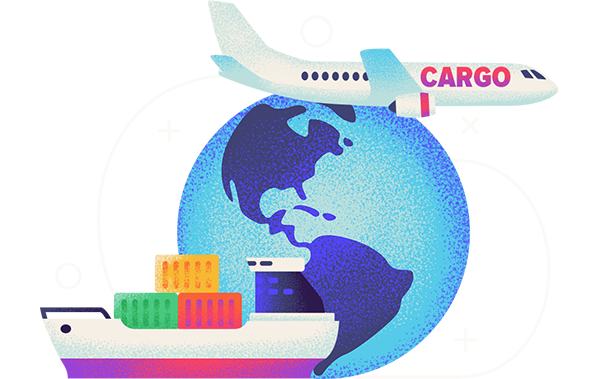

Are you down with TPP? Or do you say, “Down with TPP”? Odds are you’re not quite sure, as 71% of Americans polled by Harvard and Politico just a couple of months before the 2016 election hadn’t even heard of it. For those who still don’t know, this controversial trio of letters stands for the Trans-Pacific Partnership, a doomed international trade agreement that was established among 12 nations bordering the Pacific Ocean, including the United States.
As binding as this pact would have been for the economies of its member states, it's been equally divisive within U.S. borders. Halting it in the name of love for the American worker was a centerpiece of President Trump’s populist t path to the White House. “The Trans-Pacific Partnership is another disaster done and pushed by special interests who want to rape our country,” he proclaimed on the campaign trail.
And he succeeded shortly after reaching his destination, pulling us out of the pact on January 23. Many, including progressive Democrat Bernie Sanders, praised the move. But the numerous groups that had endorsed the deal – from the U.S. Chamber of Commerce to the National Association of Manufacturers to the National Small Business Administration –weren’t so pleased.
We may never know who was on the right side of this politically charged economic debate. But for our wallets' sake, it's certainly worth asking. And that we did. WalletHub posed one simple question – “Was the Trans-Pacific Partnership Bad for the U.S.?” – to a panel of leading experts in the fields of economics, public policy and international relations.
Below, you can find the final vote counts as well as the experts' bios and complete responses. If you have something to add, feel free to share your thoughts in the comments section.
Summary: Was TPP Bad for the U.S.?
| Info | NO | YES | YES & NO |
|---|---|---|---|
| Expert Votes | 12 | 0 | 6 |
| Featured Opinion | “When it comes to shaping global trade rules, if you’re not at the table, you’re on the menu.”- Jake Colvin // National Foreign Trade Council | No expert took this stance. | "The relevant question is not whether the TPP was a 'bad deal,' as alleged by the Trump Administration, but whether it was a worse deal than a Chinese-led TPP."- Kenneth A. Reinert // George Mason University |
Yes, TPP Was Bad for the U.S.
Believe it or not, none of the experts we reached out to chose to take this stance. If you think the TPP would have been a bad deal for America, let us know why in the comments section at the end of the page.
No, TPP Was Good for the U.S.
Highlights:
- “Following the withdrawal of the United States from TPP, our trading partners are looking to move ahead on their own and, potentially, with countries like China to deepen their trading relationships in ways that could exclude the United States. When it comes to shaping global trade rules, if you’re not at the table, you’re on the menu. With TPP in the freezer, the United States must seek new pathways to shape the rules that govern the global marketplace or risk being on the outside of a new network of arrangements where Beijing or Brussels are in the drivers’ seat.”Jake Colvin, Executive Director of the Global Innovation Forum at the National Foreign Trade Council
- “Given the United States’ strength in knowledge intensive industries and services, which benefit from a broad market, the TPP is particularly important for Americans. It increases American access to markets in which American firms currently face significant hurdles. … The Peterson Institute calculates that the benefits of the TPP would result in larger proportional gains for labor than for capital in the U.S.; furthermore, “The percentage real gains to poor and middle-class households are actually slightly larger than the gains to those at the top. Thus, the TPP will also slightly reduce income inequality.” No respected model finds that TPP hurts the U.S.”Edward Tower – Professor of Economics at Duke University
- “Mark Twain supposedly said, with his usual irony, “I’m all for progress; it’s change I don’t like.” President Trump’s knee-jerk nativism has blocked progress due to fear of change. Nations that turn inward and reject trade harm themselves and the world. On the other hand, globalization since World War II shows that nations that open markets and embrace agreements such as the TPP strengthen their economies and spread wealth and liberty to more people around the world.”Scott Bradford – Associate Professor of Economics, Brigham Young University
Ask the Experts

Frank M. Burke Chair in Taxation and Director of the School of Accounting in the Rawls College of Business at Texas Tech University
Read More

Assistant Professor in the Department of Agricultural Economics at Kansas State University
Read More

Professor of Economics at Michigan State University
Read More

Economist at University of Washington Seattle
Read More

Professor of Public Policy, Director, International Commerce and Policy Program, Schar School of Policy and Government, George Mason University
Read More

Associate Professor of Economics in the Steven J. Green School of International and Public Affairs at Florida International University
Read More
TPP Was Good for Some & Bad for Others
Highlights:
- “The U.S. is a relatively closed economy which would benefit more from a trade agreement with distant countries such as TPP, but such benefits are counteracted by drawbacks due to increasing inequality across countries after the Great Recession of 2007-2009. Therefore, the answer to the question of "Was the Trans-Pacific Partnership bad for the U.S?" depends on which of these factors dominate in real life.”Hakan Yilmazkuday – Associate Professor of Economics at Florida International University, Steven J. Green School of International and Public Affairs
- “Weighing the strategic and multilateral considerations, however, and taking a long-term view, the TPP project was probably ill-considered to begin with. Only a strong multilateral trading system, containing China within the robust WTO dispute settlement process, can support the U.S. economy in the long run. Now more than ever, the U.S. needs to remember this.”Kenneth A. Reinert – Professor of Public Policy, Director, International Commerce and Policy Program, Schar School of Policy and Government, George Mason University
Ask the Experts
Frank M. Burke Chair in Taxation and Director of the School of Accounting in the Rawls College of Business at Texas Tech University
Read More
Assistant Professor in the Department of Agricultural Economics at Kansas State University
Read More
Professor of Economics at Michigan State University
Read More
Economist at University of Washington Seattle
Read More
Professor of Public Policy, Director, International Commerce and Policy Program, Schar School of Policy and Government, George Mason University
Read More
Associate Professor of Economics in the Steven J. Green School of International and Public Affairs at Florida International University
Read More




WalletHub's personal finance experts are frequently cited by leading media outlets. Contact our media team to arrange an interview.