


The best ways to handle financial stress are to seek support from friends and family, talk to a professional, and prioritize your physical and mental health with things like exercise and meditation. You should also take control of your finances by making a budget and finding ways to manage debt and increase your income.
What Is Financial Stress?
Financial stress is the anxiety you feel about money, and it typically arises from feeling like you do not have enough money to meet needs such as paying bills, buying groceries, saving for the future, or dealing with debt. It can also be characterized as emotional tension related to money.
Financial stress can affect all aspects of your life, including your physical and emotional well-being. In fact, a WalletHub survey found that 93% of adults aged 30 to 44 say their finances affect their mental health. Read on to learn more about some of the effects of financial stress.
Effects of Financial Stress
Sleep Problems
Worrying about how you will pay for bills may cause you to suffer from insomnia or other sleep problems.
Reduced Cognitive Function
The stress and lack of sleep caused by financial problems may reduce your cognitive function and cause you to feel mentally drained.
Depression and Anxiety
Financial stress is linked to an increased risk of depression and anxiety. This can create a vicious cycle. When your mental health declines due to financial stress, it makes it even more difficult to manage your finances. In turn, your worsening finances lead to more problems, which further worsen your mental health.
Physical Ailments
Financial stress is linked to several physical ailments, such as headaches, migraines, stomachaches, heart problems, and diabetes. It can even make the conditions you have worse if you delay seeking medical care. More than 1 in 4 people have delayed getting medical care because they are worried about the cost, according to the Federal Reserve.
Worsening Financial Problems
Stress can cause you to avoid things like paying bills, make it more difficult to make financial decisions, and even reduce your income if it is affecting your productivity at work.
Issues With Relationships
Financial stress can impact your social relationships by increasing the frequency and intensity of arguments about money.
Social Isolation
You may withdraw yourself from social activities to avoid spending money or prevent yourself from feeling embarrassed or ashamed about your financial situation.
Reduced Work Productivity
Financially stressed employees are five times more likely to be distracted at work, according to a TIAA report. They also miss twice as many days of work as employees who are not financially stressed.
Weight Issues
You may overeat or skip meals when you are stressed about money, causing you to unintentionally gain or lose weight.
Unhealthy Coping Methods
Financial stress may lead to unhealthy habits – such as drinking too much alcohol, using illegal drugs, abusing prescriptions, spending money compulsively, gambling or overeating – in an attempt to make yourself feel better. Financial stress may even lead to self-harm.
How to Deal With Financial Stress
Learning to how deal with financial stress can help you get a handle on your finances and reduce the anxiety you feel about money. The tips below will get you started.
Get a Clear Understanding of Your Finances
Review things like your spending habits, income, savings, and debts to get a better understanding of your finances. It will be harder to improve your finances and relieve stress if you don’t know the specifics of your current financial situation. Simply having a better idea of where you stand might help reduce your stress level, too.
Make a Budget to Control Spending
A budget allows you to plan out your spending, so you can prioritize essential expenses and prevent overspending on unnecessary items. Knowing where every dollar of your income goes can also help you feel more in control of your spending and may reduce the anxiety you have about not having enough money to pay for your needs.
Set Up a Calendar for Bills & Paychecks
To keep up with your bills and avoid the stress of paying them late, it may be a good idea to set up a calendar that lists the due date for each bill. It can help you understand your billing cycle and visually lets you see when you need to make sure you have enough money in your account to pay a certain bill. Also logging when your paychecks come in can give you more peace of mind about cash flow.
Create a Plan to Manage Debt
Stress about debt can put you at an increased risk of depression, anxiety, high blood pressure, obesity, and a whole host of other mental and physical conditions. However, coming up with a strategy for paying off your debts can put your mind at ease. It can also help you pay less interest overall.
For example, you could decide to put an extra $100 per month toward your debt with the highest interest rate, while still making the minimum payment on your other debts, to save money and get out of debt faster. WalletHub offers personalized debt payoff plans that can help you become debt-free in the quickest and cheapest way possible.
Find Ways to Increase Your Income
You may feel stressed if you do not have enough money coming in to cover all your expenses, even after reducing your spending. To counter that, you could try to increase your income by asking your current employer for a raise, working overtime, or picking up part-time work. You may also want to consider switching to a job with higher pay. All of this is easier said than done, though.
Prioritize Self-Care for Stress Management
Doing things that are good for your mental and physical health, such as eating nutritious meals, getting sleep and exercising, can reduce your overall stress. For instance, exercising can lower stress hormones and reduce anxiety and depression symptoms. You can also do things like meditation and yoga to ease stress.
Seek Support From Friends and Family
Even though some people may consider money a taboo topic, confiding in a trusted friend or family member about your money problems can make you feel less alone and open up opportunities for you to get help with your finances. They may have some advice for you, especially if they have been in a similar position before, or they could point you in the right direction for assistance managing your finances.
Talk to a Professional
Working with a budget coach or a financial advisor can help you get your finances in order. They typically charge for their services, though. On the other hand, some non-profits, such as the National Foundation for Credit Counseling (NFCC) or the Financial Planning Association (FPA), can provide assistance for free.
Financial Stress Statistics
Money is considered one of the top stressors affecting adults every day, according to the American Psychological Association. Americans consider money more stressful than dealing with family responsibilities, discrimination and personal safety, for example. You can find more financial stress-related statistics below.
- 73% of people say that money is a major contributor to their stress levels, according to a Capital One survey.
- 49% of people struggle with debt, according to WalletHub’s Household Debt Survey.
- 42% of people say that money negatively impacts their mental health, according to a TIAA survey.
- 93% of high-income earners state that financial stress affects their mental health, according to a WalletHub survey, which is a larger share than any other income group.
- A Credit One Bank survey found that 59% of Gen Z feels stressed financially, which is a higher percentage than any other generation.
- KFF reports that 45% of people worry about their ability to pay medical bills.
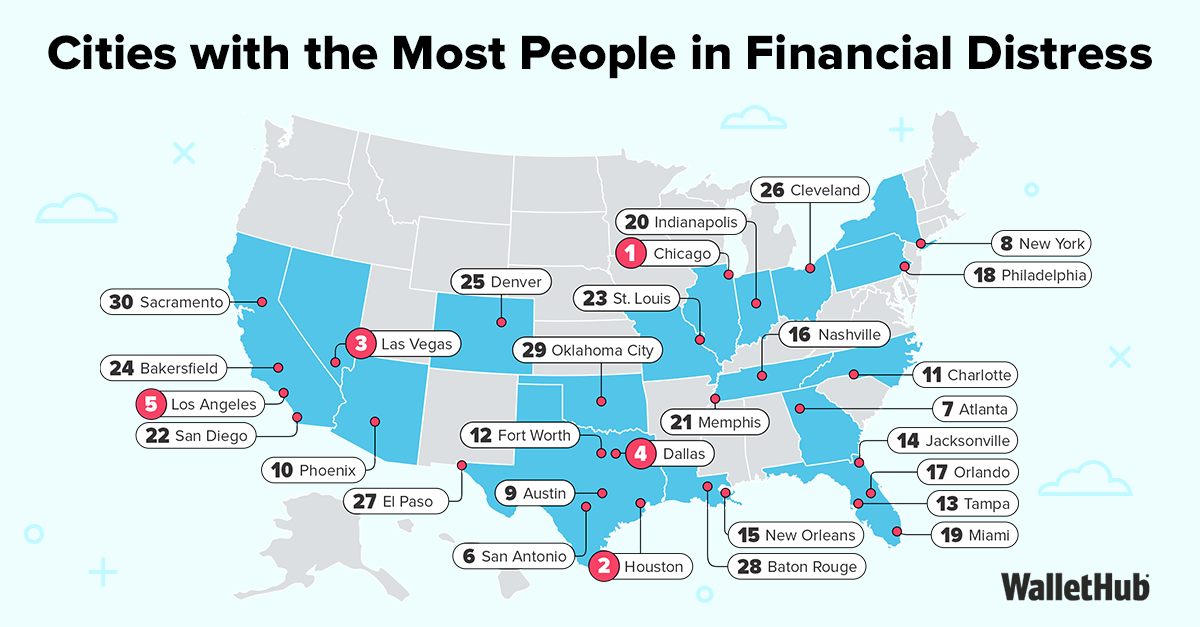
- Cleveland, Baltimore, and New Orleans have the most financially stressed residents, according to WalletHub’s analysis.
- WalletHub found Texas, Louisiana, and Nevada to be the most financially distressed states.
- When looking at all types of stress, New Mexico, Nevada, and Louisiana have the most stressed out people, according to WalletHub’s analysis.











WalletHub's personal finance experts are frequently cited by leading media outlets. Contact our media team to arrange an interview.