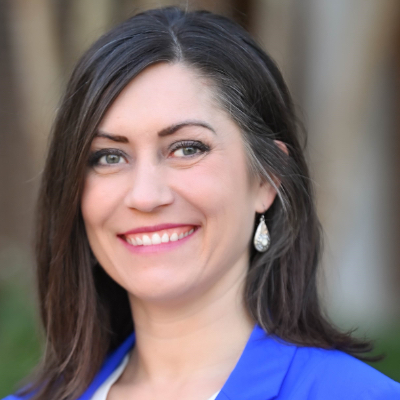
Diana Cuy Castellanos
Assistant Professor of Health and Sport Sciences at University of Dayton
How can local communities encourage and facilitate active lifestyles for residents? Is this an effective strategy to combat obesity in adults and children?
When looking at decreasing obesity in adults and children multiple factors are involved. Communities that encourage healthy lifestyles are one part of facilitating active lifestyles. Communities need to collaborate across sectors (governmental, non-profit, school, chamber of commerce, community members, etc.) to identify areas within their communities where change can be made. I want to emphasis that to be truly successful, all sectors need to be involved and committed. Every community is different and each needs to assess its environment and determine what needs to be changed and how. Some questions communities can ask are the following:
1) What policies are in place that encourage or discourage healthy living?
- School Wellness policies - are they implemented and enforced?
- City policy regarding bike use, smoking in public places, land use for growing crops/having animals, number of fast food restaurants within an geographical area, etc.
- Worksite policies in local companies.
2) Are there safe places within the community to exercise and be active. Do all residents have access?
3) Are fresh foods accessible to all populations?
4) What are schools doing to facilitate healthy lifestyles?
5) What programs/resources are available to community members to encourage healthy lifestyles? Are they culturally-appropriate? Are they accessible and appropriate for all populations?
6) What is the overall culture within the community in terms of living a healthy lifestyle?
Does the presence of professional sports teams in a city encourage residents to be more active?
Children become fans of a local professional sports team and want to emulate them so they find a field or a team and play that sport. Plus, many pro sports team have programs to encourage an active lifestyle. Perhaps, athletes could be used more to encourage exercise.
Should cities subsidize professional sports franchises through tax incentives and facilities?
Yes. These teams bring in a tremendous amount of taxable revenue in the way of ticket sales, overnight stays in local hotels, eating in restaurants, and fans frequenting other attractions. In addition, sports teams create an identity for a city and are a source of pride. The athletes themselves, both from the home team and visitors, spend money for housing, accommodations and many are active in the community. Each team also provides employment for large numbers of people.
How can we increase access to and use of gyms and recreational facilities? Would incentives--such as tax deductions for gym memberships--or penalties--such as higher health care premiums--be more effective?
Businesses would find tax incentives for providing free or subsidized gym memberships a win-win. They would have a healthier workforce, meaning fewer missed days of work for health reasons, and a lower cost for health-care with a healthy workforce. Businesses could encourage employees to utilize their gym memberships with monthly rewards for gym attendance, weight loss or other achievement. They could offer rewards for employees who enter 5k or longer races. The government could provide tax incentives for companies that offer such encouragement.
Another option would be for the individual to get a tax break for gym membership provided they can provide proof of participation. Many gyms have barcoded swipe cards that track a person’s attendance. There could even be government-subsidized gym memberships for low income people. The main issue would be to ensure that all people would have access to a gym (transportation, cost, etc.) or a disparity in this tax break or incentive would ensue.
What tips do you have for a sports lover on a budget?
Running is one of the least expensive and best activities for a child or an adult. Most races offer discounts for runners who sign up early. Many allow walkers to participate (and the entry fees typically go to a good cause) and if races are still too expensive there are running groups in cities and schools that have organized free runs. Some sports organizations offer discounts on entry fees for children from low-income families. Need equipment? Check out the newspaper for auctions in your community or go to garage sales to pick up sports equipment for pennies what the item would cost new.
If someone just wanted to watch sports and couldn’t afford to go to the games then see if they could go in with friends to buy a certain sports package and watch the games together at someone’s home.
How can parents encourage children to play sports and be active in order to combat obesity?
The parent has to be active as well and play with the child. Also, I believe in encouraging children to play team sports but not pressuring them to be one of the best players. Pressure will cause many children to give up a sport because it is less enjoyable. They should attend their child’s games and offer positive feedback. Access to electronics (video games, especially) should be limited and earned through some kind of physical activity.
Jeff Godin
Associate Professor in the Department of Exercise and Sport Science at Fitchburg State University
How can local communities encourage and facilitate active lifestyles for residents? Is this an effective strategy to combat obesity in adults and children?
Communities can encourage active lifestyles by creating an environment that is conducive to physical activity, such as having sidewalks so people can walk for recreation as well as for transportation, developing bike lanes dedicated to cyclists who commute to work, building safe parks for recreation; a variety of recreation programs for youth and adults, ranging from fitness walking to group exercise to sports.
Does the presence of professional sports teams in a city encourage residents to be more active? Should cities subsidize professional sports franchises through tax incentives and facilities?
Playing sports can be a significant source of physical activity in children. The presence of a sports team could be a source of motivation for them to engage in that sport. It is unlikely that it will impact the adult population. Teams could deliver public service announcements about the importance of regular physical activity that may increase awareness.
How can we increase access to and use of gyms and recreational facilities? Would incentives--such as tax deductions for gym memberships--or penalties--such as higher health care premiums--be more effective?
In order for people to adopt a physically active lifestyle it has to be something that is done willfully and for its own sake. Forcing people to exercise doesn't work over the long term. Higher health premiums or taxing sedentary lifestyles won't work.
Tax deduction for gym membership may help; cost is a barrier to physical activity. But you don't need a gym membership to be physically active.
What tips do you have for a sports lover on a budget?
People should get outside more and enjoy the bounty of activity that nature has to offer us. Take a hike/walk in the local park. Walk for transportation. Join a walking/running club. People can also exercise indoors, without equipment, using a variety of body weight exercise that increase cardiovascular fitness and muscle endurance.
How can parents encourage children to play sports and be active in order to combat obesity?
Let kids try a variety of sports and activities until they find one that they enjoy. Parents should think outside of the box and let kids try non-traditional sports such as rock climbing, trail running, and including activities such as dancing.
Joshua I. Newman
Associate Professor and Associate Chair of the Department of Sport Management, and Director of the Center for Sport, Health, & Equitable Development at Florida State University
How can local communities encourage and facilitate active lifestyles for residents? Is this an effective strategy to combat obesity in adults and children?
In the most active communities in the United States, citizens tend to also be actively involved in civic governance. By that I mean that in places where residents are actively dialoguing with local government officials about their needs and interests, we see greater availability and utilization of publicly-accessible sport and recreation facilities. More importantly, we see higher overall rates of both physical activity among youth—by way of physical education programs, youth sport programs, school-based sports, and public park usage—and adult physical activity—club sports, recreational sport and physical activity (hiking, biking, etc.), and so on.
By contrast, in places where the provision of sport and physical activity programming has been shifted to the private sector (private gyms, training youth sport academies, etc.) there is a considerable disparity in access to, and rates of participation in, youth and adult sport. In these contexts, many soccer, softball, or hockey parents now pay $5000 or more per year in training/coaching fees, equipment costs, travel costs, and registration fees associated with youth sport participation. In places where viable public alternatives are not available, these price points create significant barriers for many parents.
So, in short, an openly-accessible sport infrastructure still seems to be the best option for supporting the needs and interests of the broadest segment of the population.
Does the presence of professional sports teams in a city encourage residents to be more active? Should cities subsidize professional sports franchises through tax incentives and facilities?
There is no evidence to suggest a correlation between pro sports franchises and a decline in physical activity among residents. However, there is considerable evidence that here, in Florida, and in many other cities and states that public money that was once allocated for local youth and adult sport programs has in recent decades been diverted toward subsidizing construction of new stadia, and more significantly, to incentivize leagues (such as the NFL, NCAA bowl games, or NASCAR) to hold major events in that given city/state.
There is a general consensus among sport economists and business analysts that the economic impact associated with hosting major sporting events or professional teams is grossly overstated by the leagues, team owners, and event executives. What is less clear is this: what could be done instead with the public money? As I noted earlier, much of this money was traditionally spent on grants or dedicated funding to support school-based and extracurricular youth sports programs (as well as adult programs).
How can we increase access to and use of gyms and recreational facilities? Would incentives--such as tax deductions for gym memberships--or penalties--such as higher health care premiums--be more effective?
The problem, in my opinion, is less about bad choices being made by sedentary adults or youth are far more likely to do with the lack of options. In urban and rural regions alike, millions of families now find themselves living in “play deserts.” Like the notion of “food deserts” helps us explain how many families lack access to fresh and healthy foods, a “play desert” is an area within a city or region that lacks a safe and accessible playground, gymnasium, ball field, swimming pool, or other recreational facility. What is often underreported in the media is that as municipalities and county governments have cut funding for parks and recreation, many facilities have closed down and still many others have scaled back their programming, operating hours, staffing, and maintenance budgets. Further still, with fewer police on the street in many of these neighborhoods, and reduced public transportation, kids (and adults) in many neighborhoods are finding it harder and harder to actually get to a place where they can play. That, coupled with the fact that most public facilities have moved to fee-based or membership-based structures to generate revenues that might offset cuts in public funding, have resulted in considerable barriers for many families that might otherwise be more actively involved in sport and physical activity.
What tips do you have for a sports lover on a budget?
For families who might not otherwise have the means to pay, many cities and municipalities provide waivers for sport league registration fees. Also, many cities now have equipment recycling programs, where kids can get balls, bats, skates, and cleats at reduced or no cost. While physical education programs are disappearing in many states, school sports programs are still prevalent and important sources of physical activity for adolescents and teenagers.
How can parents encourage children to play sports and be active in order to combat obesity?
I think it starts with greater awareness of, and participation in, the processes by which programs, facilities, leagues, and educational actives are funded. Taxpayers are paying more than ever for sports — but the money is now going to new stadiums, teams, and direct and indirect revenues for college and professional mega-events. This money, for all intents and purposes, produces excellent conditions for consumption and spectating — but not for actively participating in sport. As the old model of using public resources to build an infrastructure that would maximize public health is replaced by a new one that seeks to maximize commercial profitability, citizens need to be aware of how that transformation will come at a price — increased costs associated with youth and community sports programs, decreased access in public sport and physical activity programs for many social groups, greater health outcome disparities (due to lack of sport participation), increased expenditures on medical treatment of obesity-related disease, and so on.
Bettina Cornwell
Edwin E. & June Woldt Cone Professor of Marketing at University of Oregon, Lundquist College of Business
How can local communities encourage and facilitate active lifestyles for residents? Is this an effective strategy to combat obesity in adults and children?
Infrastructure for sport participation is a good investment for communities. The availability of swimming pools, parks, cycling paths and the like are all good investments. Not only do they support an active lifestyle but they support the sense of community that allows an active lifestyle.
Does the presence of professional sports teams in a city encourage residents to be more active? Should cities subsidize professional sports franchises through tax incentives and facilities?
Research in the UK has shown that elite athletes can inspire sport participation. This is however not the only path. My feeling is that communities are not against professional facilities but when there is not enough money to support community sport and physical education in schools then communities resist.
How can we increase access to and use of gyms and recreational facilities? Would incentives--such as tax deductions for gym memberships--or penalties--such as higher health care premiums--be more effective?
I prefer the idea of incentivizing sport participation and an active lifestyle over penalizing. Some of our research has shown that people first need barriers such as stress to be removed before they can feel free to participate in sports and other physical activities. For many people it is about the time pressure they feel between work and home or other commitments. For example, a new mother may want to exercise but may not have childcare in order to do so and further may feel that exercise is not as essential as some other tasks and therefore reluctant to find childcare to support her own health.
What tips do you have for a sports lover on a budget?
Running and walking are some of the most affordable sports with low barriers to entry. Almost all individual sports are relatively affordable including biking and swimming. Team sports are more expensive in terms of equipment, training and venues for play. Still these forms of sport are made affordable in many communities through groups such as the YMCA. We have admittedly had an orientation in the United States toward elite sport and this has reduced some of the orientation toward lifelong sport. Many children leave competitive sport or team sport about the age of 14 but this could change with more interest in and support for continuous participation. It is however a cultural shift of sorts that we should work towards.
How can parents encourage children to play sports and be active in order to combat obesity?
Children enjoy doing things that they are good at doing, just like adults. With this in mind children should engage in sport and physical activity early, very early. It is much harder to change a behavior pattern once established than to establish the pattern of being active in the beginning. Even taking an evening walk together as a family is a nice starting point. One saying I like is that "there is no such thing as bad weather only inappropriate attire." So don't let the weather stop you, rather make it a family tradition.
Emily Sparvero
Clinical Assistant Professor of Sport Management at University of Texas at Austin
How can local communities encourage and facilitate active lifestyles for residents? Is this an effective strategy to combat obesity in adults and children?
Communities have tried a myriad of approaches to encouraging physical activity and combating obesity, and there still seems to be limited success with approaches based on public health, sociology, advertising, social marketing, etc. Ultimately, an economist would say that there are two uses of our time – labor and leisure. So, in order to encourage residents to engage in the recommended amount of physical activity, the individual would need to be willing to sacrifice time spent in labor or other leisure pursuits. So, this is a complex issue of motivation. There are things that communities can do to allow for double-dipping of sorts – for example, to combine physical activity and labor time, I think of a friend who was running for political office. He spent a great deal of time block-walking in the neighborhood he would represent (going door to door to meet with constituents) and he was in great shape by election day. Or to combine physical activity and leisure, I am reminded of a running group in my old Philadelphia neighborhood – the Fishtown Beer Runners, who would run 3 to 5 miles and end up at a pub in the neighborhood. But these examples are all individually-motivated. I’m not convinced there are community wide efforts (including community norms about physical activity) that would be successful, although safe communities with public recreation opportunities are certainly a start.
Does the presence of professional sports teams in a city encourage residents to be more active? Should cities subsidize professional sports franchises through tax incentives and facilities?
The presence of professional sports teams alone does not encourage residents to be more active – rather if sport participation is viewed as a substitute for other leisure activities, residents may be more likely to be spectators instead of participants. Still, the celebrity power of professional athletes and sport teams can encourage some individuals to be more active, especially if the teams work with community stakeholders and health experts to develop and implement community programs to encourage physical activity. The cachet of athletes can draw attention to such programs, while the team may have a range of assets that can be contributed to the cause (e.g., expertise on nutrition & training, media inventory, facility assets).
How can we increase access to and use of gyms and recreational facilities? Would incentives--such as tax deductions for gym memberships--or penalties--such as higher health care premiums--be more effective?
The key issue is that we want policy decisions to incentivize the behaviors we want to see. So, in the case of tax deductions for gym memberships, you can offer these but do they really get people to engage in more physical activity? With penalties like higher health care premiums, the administrative cost to determining who is penalized may be prohibitive. Instead, a more direct incentive system – such as one where health insurance companies or employers offer direct incentives to individuals who complete a minimum recommended number of visits to gyms may be more effective. Employees can keep a log book that is filled out by gym personnel, and once complete, they receive a subsidy toward the gym membership.
What tips do you have for a sports lover on a budget?
For participants, you can be active and participate in sports virtually anywhere. In a city like Austin, TX, we like to think of ourselves as a city within a park, and residents have access to many hike and bike trails. Of course, this is easier when you live in safe community with good weather. You can also seek out athletic leagues provided through city parks and recreation departments, which are frequently more affordable than privately-run athletic leagues.
For spectators, you can’t miss with minor-league, college, or even high school sports. With the exception of the most highly identified sports fans, we are driven to attend sport events as spectators because we seek a social experience with friends and families. Minor league and school sports can provide the social outlet and excitement at a fraction of the cost.
How can parents encourage children to play sports and be active in order to combat obesity?
The most important thing parents can do is to focus on the play aspect of sport. Children face a great deal of pressure to compete and succeed from an early age, but the health benefits of sport do not only accrue to those children who are the best or who can compete at elite levels. Children who are given the opportunity to play without the attendant pressure of being the best have the chance to develop healthy habits and experience the joy of sports that can keep them active throughout their lives. Parents can set a good example by being active themselves, and by engaging in sport and physical activity that is appropriate for all members of the family.
Jacob M. Haus
Assistant Professor of Kinesiology and Nutrition in the College of Applied Health Sciences at University of Illinois
How can local communities encourage and facilitate active lifestyles for residents? Is this an effective strategy to combat obesity in adults and children?
Accessibility to parks, recreation areas, walking trails, cycling trails, dedicated bike lanes, bike racks, water fountains, etc. Another important component to consider is safe and lighted sidewalks. If the city is one prone to cold weather, ice and snow then the city and community need to keep sidewalks and walking paths clear and free of ice. City planning must have physical activity needs in mind when making changes. Basically, the community has to create a culture to encourage physical activity by dedicating the appropriate resources.
Further, community health leader need to be advocates of physical activity by promoting events within the parks and recreation areas - walking programs, fun runs, runs or walks for charity, fitness challenges, etc. collectively, more children and adults will utilize these resources and engage in greater amounts of physical activity.
Does the presence of professional sports teams in a city encourage residents to be more active? Should cities subsidize professional sports franchises through tax incentives and facilities?
Only if the sports teams are advocates of physical activity in the community by sponsoring and participating in programs like NFL play 60.
How can we increase access to and use of gyms and recreational facilities? Would incentives--such as tax deductions for gym memberships--or penalties--such as higher health care premiums--be more effective?
Private “gyms” have a negative stigma in the community. Community centers that offer gym like equipment, classes and aquatics are more successful in engaging community members in physical activity. City run community centers and or recreation centers that have low fees and/or offer free programs like outdoor yoga or outdoor fitness classes in a local parks are likely to draw both the fitness enthusiasts and sedentary adults/children that want to try something new.
What tips do you have for a sports lover on a budget?
Utilize the resources of the city parks and recreation division. Look for free outdoor classes or discounted team/individual sports activities that meet weekly for competitive play. Join a club team if one is available in your area.
How can parents encourage children to play sports and be active in order to combat obesity?
Be physically active themselves. Encourage multi-sport vs. individual sport participation so that the child identifies what he/she likes versus what the parent wants. Engage the family by walking/biking to the park for picnics and/or family gatherings. Go to the beach and swim/play with your children. Parents are the best role models for children. If mom and dad are physically active and eat healthy then the children will follow.
John R. Sirard
Assistant Professor of Kinesiology in the Commonwealth Honors College at University of Massachusetts Amherst
How can local communities encourage and facilitate active lifestyles for residents? Is this an effective strategy to combat obesity in adults and children?
We need to make the active/healthy choice the easy, convenient choice. When it comes to promoting active lifestyles at the community level, I believe in the "if you build it, they will come" philosophy. This works best with strategic public relations and promotions efforts to increase awareness and promote use. Whether these community opportunities (e.g., parks and playgrounds, open green spaces, nature trails and preserves, community centers) increase activity or whether active people move to communities that already have these resources (supporting an already active lifestyle) is still being investigated. Regardless of the mechanism, providing adequate and safe infrastructure to support being active can be an effective strategy for all people.
Does the presence of professional sports teams in a city encourage residents to be more active? Should cities subsidize professional sports franchises through tax incentives and facilities?
I don't know of any research that would support this. My guess is, no. It seems that professional sports teams encourage the viewing of the sport (armchair quarterback) rather than the actual playing of the sport or doing any form of training or exercise. I guess the exception would be the outreach efforts of pro teams (NFL's Play60) but I have not seen any independent research on the effectiveness of such programs.
Whether cities should subsidize sports franchises with the expectation that such programs will promote a healthier population, has no basis in research. In fact, quite the opposite may be true, with such facilities/programs leading to excess alcohol consumption (e.g., tailgating) and resulting unsafe behavior, over consumption of other unhealthy foods, and the practice of sitting for long periods of time while watching a professional sports game.
How can we increase access to and use of gyms and recreational facilities? Would incentives--such as tax deductions for gym memberships--or penalties--such as higher health care premiums--be more effective?
Commercial gyms are for-profit businesses typically interested in increasing the number of memberships; improving health is sometimes a secondary goal. If everyone who actually had a membership to XXX Gym went there every day/most days, it would likely be too crowded to move. Most commercial gyms rely on people signing up and then not showing up regularly, or at all. Sorry to be so pessimistic/jaded. A solution is to combine these for profit centers with research-based behavior change strategies to encourage long-term use and sustainable healthy behaviors.
I think the carrot approach (financial incentives) is more realistic and will gain more traction than the stick approach (financial penalties). Such incentives include insurance reimbursement for fitness center membership, given you go to the facility a certain number of times per month. Others would include fitness and locker room facilities at large employers, replacing unhealthy vending machine and cafeteria options.
What tips do you have for a sports lover on a budget?
Sports (organized team sports) can be a great way to get some physical activity and provides a social outlet (important for mental health). However, the weekend warrior may just hurt themselves more often than not if they don't do any conditioning besides a weekend game. Also, a "team" requires multiple people and coordination of busy schedules. Great, if you can manage it. If that seems unlikely, invest in a decent pair of cross trainers or running shoes and work out at home. The internet is full of body weight or minimal equipment exercise routines that one can do at home or in a limited amount of space. There are a number of apps, too that are relatively inexpensive and engaging (e.g., Zombies, Run!). As always, start out slow, don't do anything that hurts or aggravates an existing injury or limitation, and consult a physician before starting anything new.
How can parents encourage children to play sports and be active in order to combat obesity?
Parents should model the behaviors they want to see in their children.
Adults should perform moderate-to-vigorous intensity physical activity (equivalent to at least a brisk walk) at least 30 minutes 5-7 days per week for health benefits; more time and/or intensity is needed if the goal is weight loss.
Children should perform moderate-to-vigorous intensity physical activity for at least 60 minutes every day.
When you exercise, don't complain about it or describe it as a chore. Focus on how great you feel during and afterwards. Focus on this positive reinforcement - for yourself and your kids. Focus on the immediate feel-good feelings, and less about the future health benefits (which are irrelevant for most children and adolescents) or weight loss. Limit screen time to less than two hours per day; no screens for kids under two; no screens on school days and limit screen time on weekends - this is what the Obama's do with their daughters. If you can afford to sign your child up for a youth sports team, great. However, some programs can be financially prohibitive so strive to also encourage non team-based activities that kids can do on their own or with a small number of others (parents, siblings, a friend or two). Linking back to the first question, teach your children correct pedestrian and cycling rules and encourage alternative modes of transportation. This is also a good way for parents to tie in lessons on environmental stewardship by discussing carbon emissions and pollution.
Lee J. deLisle
Professor in the Department of Recreation and Leisure Studies at Southern Connecticut State University
How can local communities encourage and facilitate active lifestyles for residents? Is this an effective strategy to combat obesity in adults and children?
Perhaps the most important element is to promote a wide variety of physical activities that appeal to the demographics of a community. Municipal services such as recreation departments and accessible parks certainly help this effort. There is a significant amount of research on the value of parks and programs available through the National Recreation and Parks Association.
Does the presence of professional sports teams in a city encourage residents to be more active? Should cities subsidize professional sports franchises through tax incentives and facilities?
I do not believe that a professional team promotes individual lifestyle choices regarding physical activity. This would be an interesting study to conduct. I do not feel that cities should subsidize professional sport businesses, particularly at the expense of more effective community services. While there is a measurable "psychic income" effect from having a successful team with which to identify, it does not warrant the types of investment that have been the norm in the past.
What tips do you have for a sports lover on a budget?
Many sport activities are relatively inexpensive. Choose lifetime sport activities that can be practiced individually and engaged in with others. Social interaction is a very important component of an active lifestyle. Paid spectatorship should be a last resort!
How can parents encourage children to play sports and be active in order to combat obesity?
Play along with them. Be a model of engagement. Offer a wide variety of options, not just the activities that you personally enjoyed or had some level of success with in your past. Understand the difference between supporting and pushing a child into an activity.
Becca Battaglini
Director of the Lifetime Fitness and Physical Activity Programs in the Department of Exercise and Sport Science at University of North Carolina at Chapel Hill
How can local communities encourage and facilitate active lifestyles for residents? Is this an effective strategy to combat obesity in adults and children?
One of the best ways for communities to encourage more active lifestyles is to make neighborhoods and cities more “walkable”. This has become the big platform for the
Surgeon General and I agree with his statements. If communities created sidewalks connecting places together, this would encourage people to not only walk, but bike from place to place. Personally, I know I would bike to more places with my children if there were safer routes for us. Creating something as simple as sidewalks would hopefully encourage both adults and children alike to get out and move more.
Does the presence of professional sports teams in a city encourage residents to be more active? Should cities subsidize professional sports franchises through tax incentives and facilities?
I don’t think the presence of a professional sports team equates to more active residents. The love of the sport and the love for the team can certainly drive residents to “be like Mike”, but when you think of a sports fan, you think of tailgating (which includes unhealthy foods and alcohol usually). Perhaps in the pre-game atmosphere, there could be more opportunities for youth and adult to participate in sporting activities that would make a positive impact on their health. I know that here in Chapel Hill, NC – there are die-hard Tar Heel fans, and the adult fans are always the first ones to sign up their children for anything Tar Heel sport-related (camps, clinics, autograph sessions, tournaments, etc.). That passion for a team needs to be extended to include adults as well.
How can we increase access to and use of gyms and recreational facilities? Would incentives--such as tax deductions for gym memberships--or penalties--such as higher health care premiums--be more effective?
One of the biggest ideas that we all need to understand is that you do not have to have a gym membership or belong to a rec facility to keep active and stay healthy. A large portion of what we teach our students here at UNC-CH is that lifetime fitness does not have to be complicated or come with a large price tag. Finding activities that increase cardiovascular and muscular endurance are important, but these can be done outside of the four-walls of a gym! A workout can be as simple as a jog and some simple body weight exercises. It starts with education of these principles. So instead of creating tax deductions for gym memberships, create tax deductions for completion of classes at a local YMCA or even online. If offered an incentive, someone seeking that incentive could sign up for a gym membership, but never step foot in the gym. What good would that do? Or same with being faced with a premium penalty – they will “lie” about their activity levels. Instead, health care companies should require completion of various educational materials such as “fitness and healthy eating”.
What tips do you have for a sports lover on a budget?
This could be answered two ways (A) a lover of watching professional sports; or (B) a lover of participating in sports). For (A), I can’t answer that too well! For (B), there are so many opportunities that already exist for people to be active through sport. Community Recreation Programs usually have leagues and tournaments for many different types of sports that are budget-friendly, as well as centers such as the YMCA. Many times you do not have to have a “membership” to be on a team, or in a tournament. Those fees are usually separate from the facility membership.
How can parents encourage children to play sports and be active in order to combat obesity?
I have 3 children, and my biggest advice to other parents would be to lose the electronics, or at least put a huge time limit on screen time. It is a cheap and easy “baby-sitter, but video games/electronics are doing so much damage to our children! Let’s Move provided this staggering statistic: “Adolescents ages 8-18 spend an average of 7.5 hours a day using entertainment media (TV, computer, video games, cell phones, and movies)”. When children are not in front of something electronic, they are more likely to want to move (whether it be in organized youth sports, or simply playing outside). When they sit all day at school, and come home a sit some more… it’s no wonder our country is facing an obesity epidemic. But inactivity is not the only factor in obesity – food choices are a huge contributor as well. Sodas and processed foods are so prevalent in the youth diet, and their bodies are not being properly fueled to be active. The two go hand in hand (activity and diet), and to be successful in combating obesity, you need to focus on both. By putting down the electronics, parents can choose to be active with their children and model a healthy lifestyle for their children to follow.
Scott Ickes
Assistant Professor of Health Services at the University of Washington School of Public Health
How can local communities encourage and facilitate active lifestyles for residents? Is this an effective strategy to combat obesity in adults and children?
I think mixed used land zooming and walkable neighborhoods that are safe and inviting are great ways to encourage walkability and active lifestyles. I don't think we can point to the physical environment to say that this would definitely solve the obesity problem, but it can't hurt. There are many other benefits to active lifestyle communities such as greater social connectivity, economic gains, and lower environmental impact -- all of which should also be considered when we consider how to build, zone, and redevelop.
Does the presence of professional sports teams in a city encourage residents to be more active? Should cities subsidize professional sports franchises through tax incentives and facilities?
Local heroes can help encourage sports participation among young people.
How can we increase access to and use of gyms and recreational facilities? Would incentives--such as tax deductions for gym memberships--or penalties--such as higher health care premiums--be more effective?
I think both would be effective. Studies have looked at both of these approaches and we see positive effects from both incentives and disincentives for being sedentary. Disincentives for physical activity can be difficult to monitor and regulate, however. For example, how do you handle people who bike or walk to work, but don't go to the gym.
What tips do you have for a sports lover on a budget?
Walking, running, bicycling are great ways to be physically active. Play does not have to cost money. Joining leagues, memberships, and equipment do all cost money, but these are not needed to be physically active.
How can parents encourage children to play sports and be active in order to combat obesity?
The best way is for parents to monitor physical activity by being active themselves.
Community Discussion