







- Best rewards credit cards compared
- Methodology
- Sources
- About the author
- User questions & answers
Best Rewards Credit Cards Compared
| Credit Card | Best For | Rewards Rate | Initial Bonus Offer |
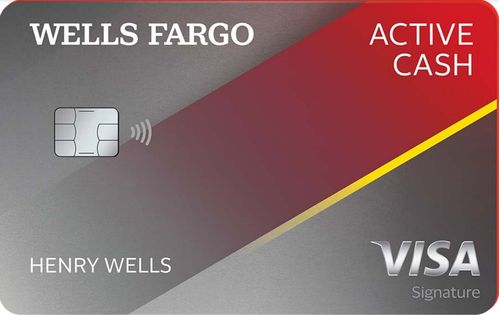
| Wells Fargo Active Cash® Card | Overall | 2% Cash Rewards |
$200 Cash Rewards |
| Chase Freedom Unlimited® | Rewards with No Annual Fee | 1.5 - 5% Cash Back | $250 for spending $500 on purchases in the first 3 months (limited-time offer) |
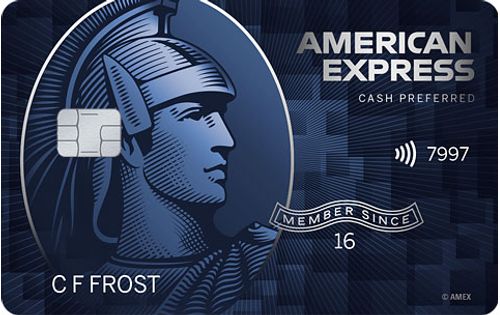
| Blue Cash Preferred® Card from American Express | Gas & Groceries | 1 - 6% Cash Back | You can earn as high as $300 cash back for spending $3,000 in purchases within the first 6 months (welcome offers vary and you may not be eligible for an offer; apply and, if approved, find out your offer amount and accept the card with your offer, spend $3,000 in 6 months, and receive the cash back in the form of Reward Dollars, which can be redeemed for a statement credit or at Amazon.com checkout) |
| Chase Sapphire Preferred® Card | Initial Bonus | 1 - 5 points / $1 | 75,000 points for spending $5,000 on purchases in the first 3 months |
| Capital One Venture Rewards Credit Card (see Rates & Fees) | Travel Rewards | 2 - 5 miles / $1 | 75,000 miles for spending $4,000 in the first 3 months from account opening, plus $250 to use on Capital One Travel in the first year (limited-time offer) |
| Capital One SavorOne Cash Rewards Credit Card | Rewards with Fair Credit | 1 - 8% Cash Back | N/A |
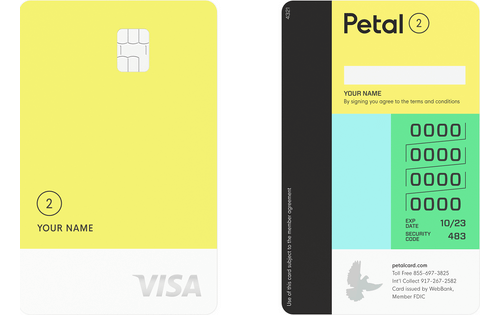
| Petal® 2 Visa® Credit Card | Rewards with No Credit | 1 - 1.5% Cash Back | N/A |
| Discover it® Secured Credit Card | Rewards with Bad Credit | 2% cash back at gas stations and restaurants (up to $1,000 spent each quarter combined), and 1% back on all other purchases | Earned rewards matched at the end of year one for new cardmembers |
| Capital One Savor Student Cash Rewards Credit Card (see Rates & Fees) | Students | 1 - 8% Cash Back | $50 for spending $100 in the first 3 months |
The best credit card rewards come in all shapes and sizes. The offers on this page are the best overall. But you can find more great options by checking out WalletHub’s picks for the best cash back credit cards and the best travel rewards cards.
Methodology for Selecting the Best Rewards Credit Cards
WalletHub’s Key Rating Components
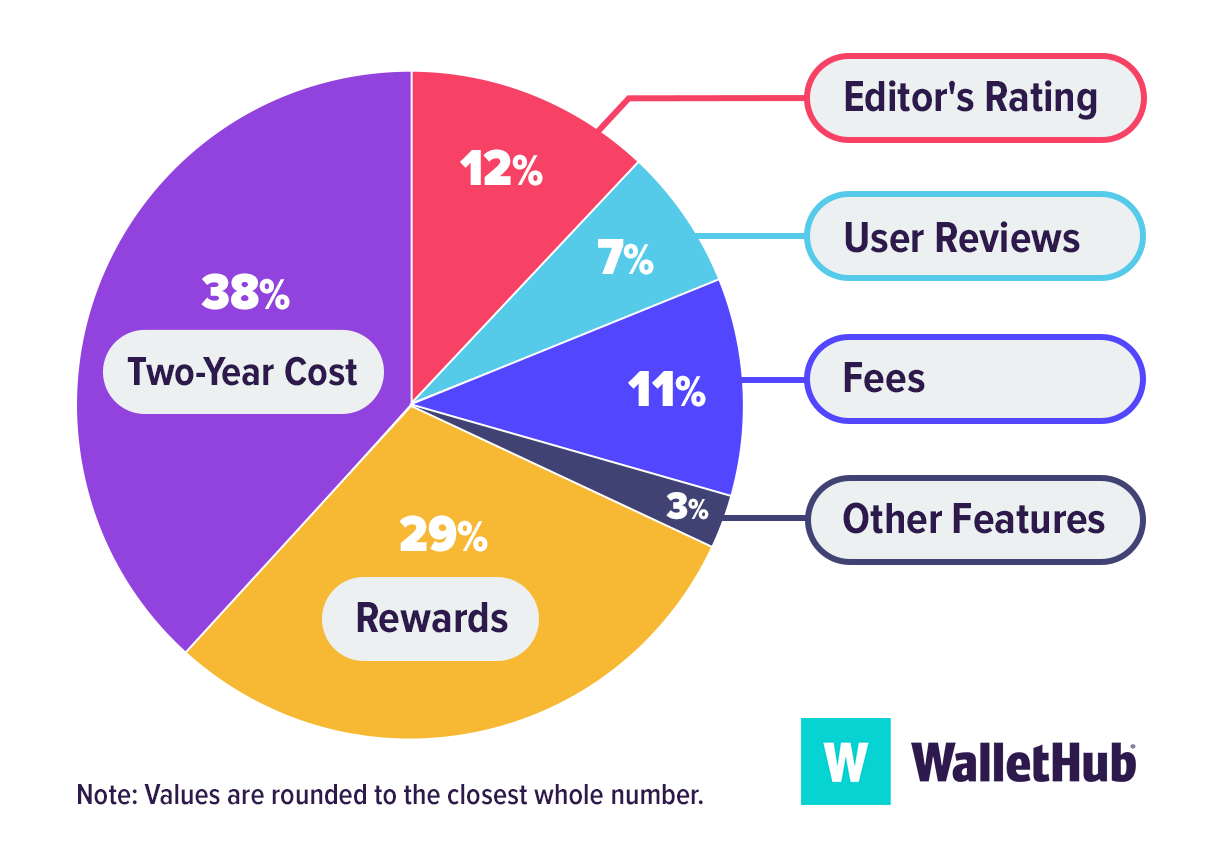 Two-Year Cost: 38% - We assess the overall cost of a card by considering its fees and then evaluating how rewards can offset those costs based on optimal redemption options.
Rewards: 29% - We evaluate each card’s overall rewards on purchases, as well as how rewards vary across spending categories, to determine total earning potential and value.
Editor’s Rating: 12% - WalletHub editors decide scores based on a comprehensive assessment of each card’s terms, including its rewards, fees, interest rates, benefits, and competitiveness within the market.
Fees: 11% - We review all costs that a cardholder may have to cover to own a credit card, including annual, monthly, and foreign fees, to determine the true cost of ownership.
User Reviews: 7% - We review consumer feedback to understand how satisfied cardholders really are.
Other Features: 3% - We make sure to look at any extra features and benefits, including statement credits, shopping benefits, concierge services, exclusive event access, lounge privileges, travel and purchase protections, and other perks that may add value.
In addition, a couple of cards are selected to address different needs and may have slight variations in their score distribution as a result. These include cards for individuals with below-average credit scores and students.
How Two-Year Cost Is CalculatedTwo-year cost is used to approximate the monetary value of cards for better comparison and is calculated by combining annual and monthly membership fees over two years, adding any one-time fees or other fees (like balance transfer fees), adding any interest costs, and subtracting rewards. Negative amounts indicate savings. When fees or other terms are presented as a range, we use the midpoint for scoring purposes.
Rewards bonuses and credits have been taken into account for two-year cost calculations. However, bonuses applicable to only a very small portion of cardholders are not considered. For example, credits and bonuses awarded for spending or redeeming rewards through a company portal with non-co-branded cards have not been taken into account. Similarly, bonuses and credits related to spending with specific merchants using a non-co-branded card have not been taken into account (for example, if Card A offers credits with DoorDash, this feature would not be factored into calculations because it is hard to assess how many cardholders would use the benefit or exactly how much value they'd get from it).
Cardholder Spending Profiles
Given that different users have different goals and are likely to use their credit cards differently, we identified spending profiles that are representative of different users’ financial priorities and behaviors. For each cardholder type, we have assumed a specific amount of monthly spending by purchase type (e.g., groceries, gas, etc.), as well as an average balance, balance transfer amount, amount spent on large purchases and average monthly payment. Spending assumptions are based on Bureau of Labor Statistics data.
Sources
WalletHub actively maintains a database of 1,500+ credit card offers, from which we select the best rewards credit cards for different applicants as well as derive market-wide takeaways and trends. The underlying data is compiled from credit card company websites or provided directly by the credit card issuers. We also leverage data from the Bureau of Labor Statistics to develop cardholder profiles, used to estimate cards’ potential savings.