

Methodology
WalletHub monitors the latest Discover credit cards, in addition to more than 1,500 other credit card offers, in order to help people find and get approved for the best credit card for their needs, whatever those needs may be. Given that many different types of people are in the market for a Discover credit card, we select the best options in a handful of popular usage categories.
In making our picks for the best Discover credit cards by category, we consider the terms and card features most important to the particular type of user or transaction in question, based on WalletHub Rating components. With most rewards-based categories, for example, we consider the average person’s expected net rewards earnings after two years of use, based on spending data from the U.S. Bureau of Labor Statistics. On the other hand, when considering big-ticket purchases that will take more than a month to pay off, a card’s introductory APR offer, regular APR and annual fee are the most important terms to take into account. And we use those terms to calculate the expected cost of each card when used to pay down a certain balance over the course of 24 months.
The particular parameters vary by category, but the bottom line is that we crunch the numbers to find you the best deal, so that you can maximize your savings with minimal effort.
WalletHub’s Key Rating Components
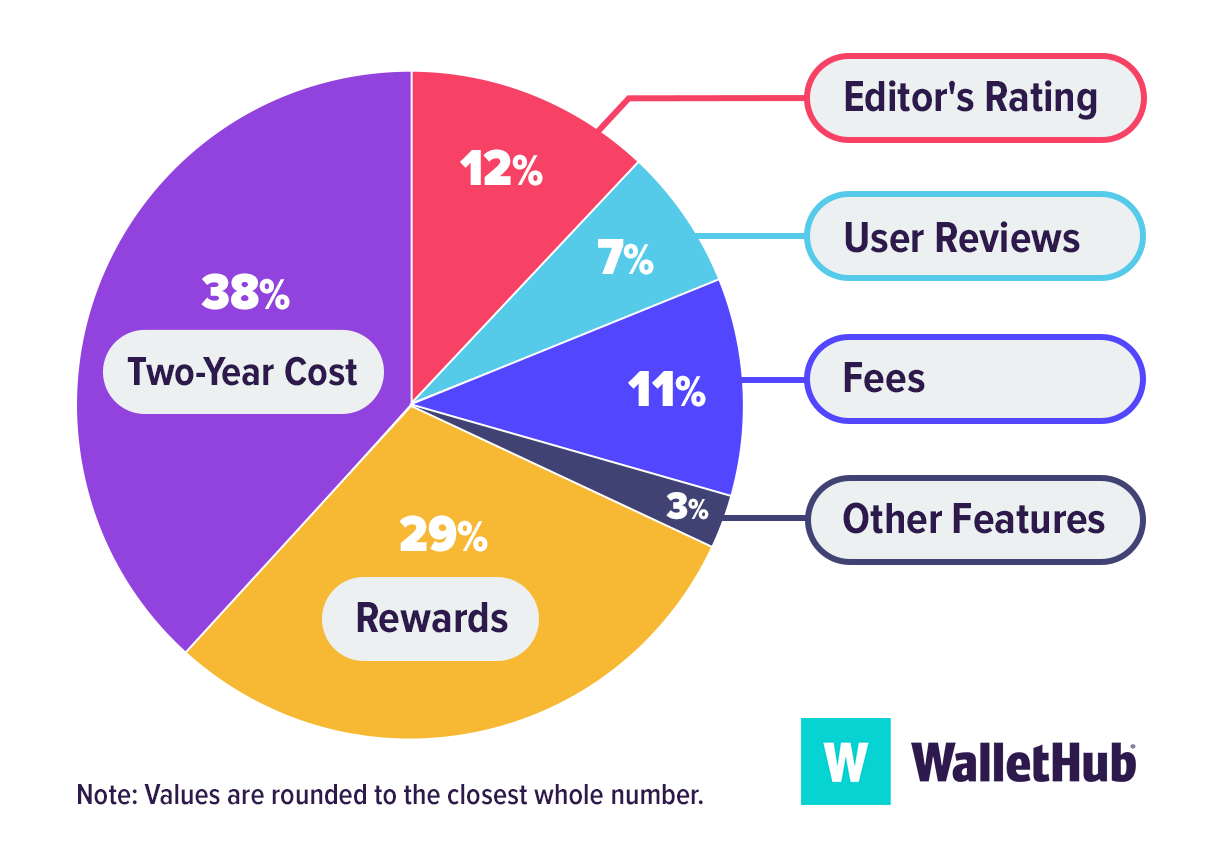
Two-Year Cost: 38% – We assess overall value by comparing each card’s annual fee with the total cash back value of the rewards a cardholder can expect to earn over a two year period. Cards that consistently provide strong returns with minimal cost rank the highest.
Rewards: 29% – We evaluate each Discover card’s rewards structure. Emphasis is placed on how easy it is for cardholders to earn and redeem rewards on everyday spending.
Editor’s Rating: 12% – Our editorial team assesses how strong each Discover card is, compared to both other Discover cards and cards from other credit card companies. We consider ease of use, overall value, and how well the card fits different types of users.
Fees: 11% – We analyze all major fees associated with each card.
User Reviews: 7% – We incorporate feedback from Discover cardholders to understand their experiences and overall satisfaction with each card.
Other Features: 3% – We look at additional benefits unique to Discover, such as credits in popular spending categories, free credit score access, security features, and other cardholder friendly tools that improve the overall experience.
We also use slightly different scoring criteria for cards that offer long introductory APR periods or are designed for people with fair or limited credit, including students.
How Two-Year Cost Is Calculated
Two-year cost is used to approximate the monetary value of cards for better comparison and is calculated by combining annual and monthly membership fees over two years, adding any one-time fees or other fees (like balance transfer fees), adding any interest costs, and subtracting rewards. Negative amounts indicate savings. When fees or other terms are presented as a range, we use the midpoint for scoring purposes.
Rewards bonuses and credits have been taken into account for two-year cost calculations. However, bonuses applicable to only a very small portion of cardholders are not considered. For example, credits and bonuses awarded for spending or redeeming rewards through a company portal with non-co-branded cards have not been taken into account. Similarly, bonuses and credits related to spending with specific merchants using a non-co-branded card have not been taken into account (for example, if Card A offers credits with DoorDash, this feature would not be factored into calculations because it is hard to assess how many cardholders would use the benefit or exactly how much value they'd get from it).
Cardholder Spending Profiles
Given that different users have different goals and are likely to use their credit cards differently, we identified spending profiles that are representative of different users’ financial priorities and behaviors. For each cardholder type, we have assumed a specific amount of monthly spending by purchase type (e.g., groceries, gas, etc.), as well as an average balance, balance transfer amount, amount spent on large purchases and average monthly payment. Spending assumptions are based on Bureau of Labor Statistics data for consumers and PEX data for businesses.
Sources
WalletHub actively maintains a database of 1,500+ credit card offers, from which we select the best Discover credit cards for different applicants as well as derive market-wide takeaways and trends. The underlying data is compiled from credit card company websites or provided directly by the credit card issuers. We also leverage data from the Bureau of Labor Statistics to develop cardholder profiles, used to estimate cards’ potential savings.