












Methodology
This enables us to ultimately select the best Visa cards for rewards, business, bad credit and other popular categories.
WalletHub’s Key Rating Components
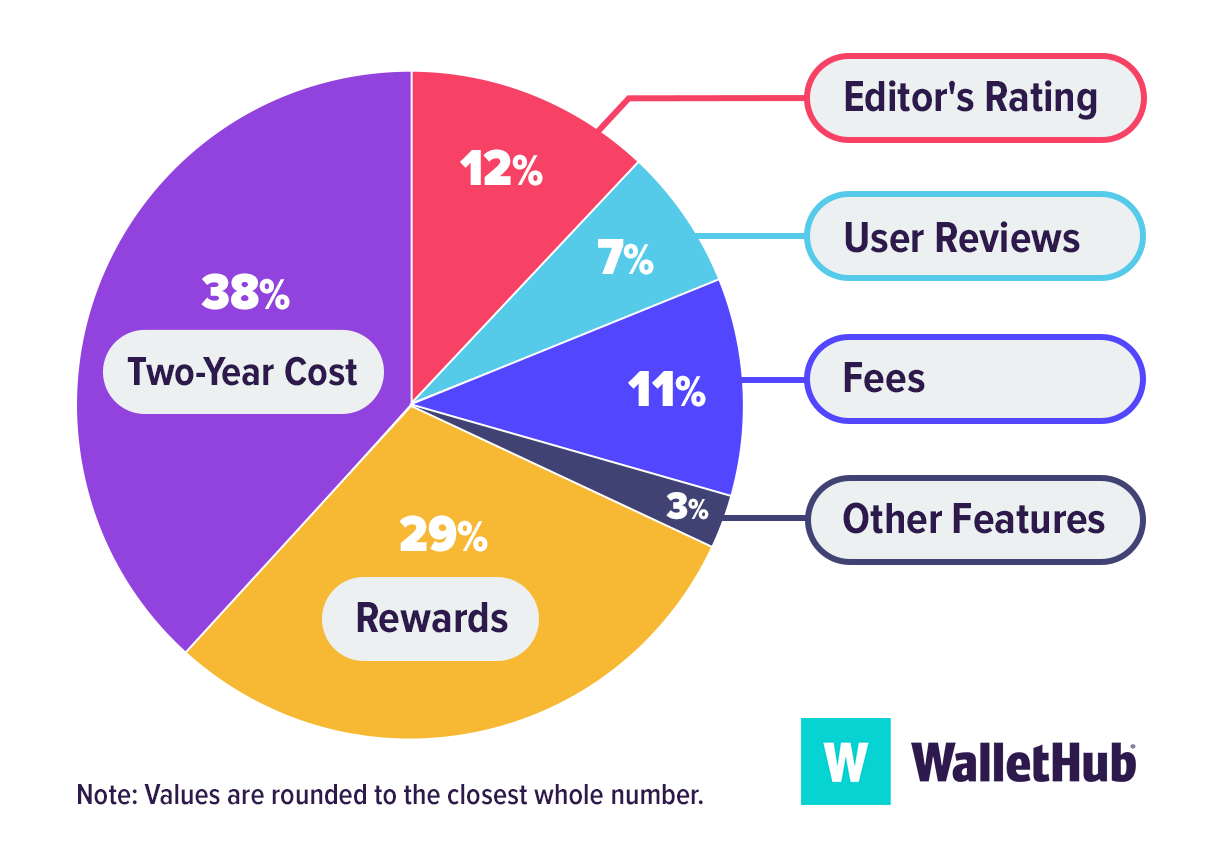
Two-Year Cost: 38% – We calculate each card’s overall value by comparing its annual fee to the rewards a cardholder can earn over a two year period. Cards that consistently deliver strong net value receive higher scores.
Rewards: 29% – We analyze earning rates, bonus categories, redemption options, and overall reward value for each Visa card.
Editor’s Rating: 12% – Our editorial team assesses how each card compares to other Visa credit cards as well as competing offers from other payment networks. We consider rewards potential, ease of use, overall value, and more.
Fees: 11% – We review all major costs, including annual fees, foreign transaction fees, and other charges that may affect long term value. Cards with reasonable and transparent fee structures score higher.
User Reviews: 7% – We incorporate feedback from cardholders to better understand their experiences with each card.
Other Features: 3% – We consider additional benefits such as travel protections, preferred boarding, and Visa-specific perks that enhance the overall cardholder experience.
Some of the cards are selected because they offer long introductory APR periods, and others are picked for students or people with below-average credit scores. These cards use a slightly different scoring methodology based on those specific categories.
Sources
WalletHub actively maintains a database of 1,500+ credit card offers, from which we select the best Visa credit cards for different applicants as well as derive market-wide takeaways and trends. The underlying data is compiled from credit card company websites or provided directly by the credit card issuers. We also leverage data from the Bureau of Labor Statistics to develop cardholder profiles, used to estimate cards’ potential savings.